What started as an argument about spelling resulted in Varn being in the national news.
You never know what a day in PR will bring. When I woke up on that fateful day back in May – just a few weeks into my new role as head of digital PR – it felt like a normal day. I drank some coffee. Made some small talk. Drafted a press release. A standard senior appointment release. I’ve written hundreds in my time. None have been as influential as this one.
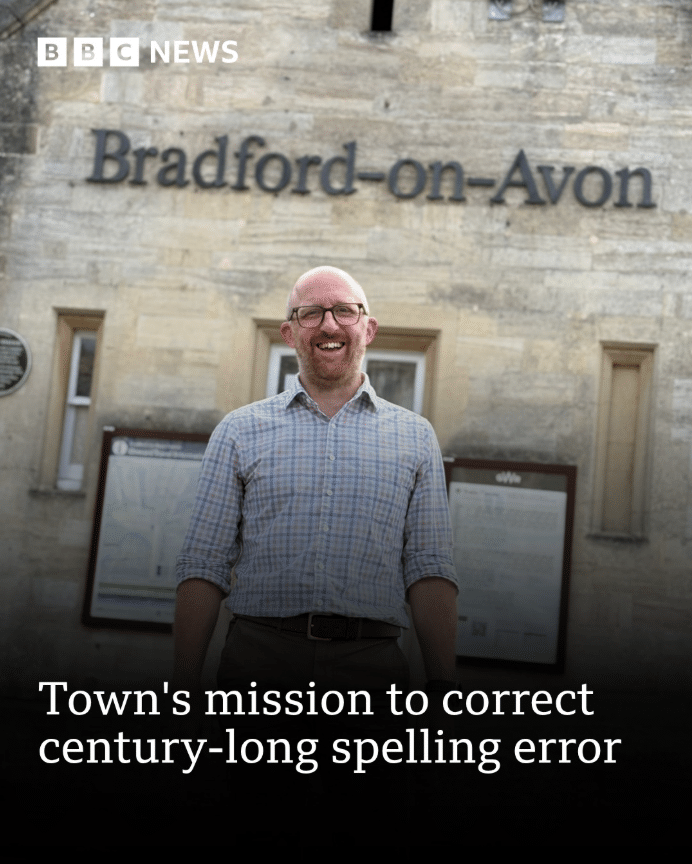
The first domino to fall in this saga was a small one. I asked Gemini to proofread a press release. The AI decided that Bradford on Avon was better with hyphens. Those two little horizontal lines set us on a path that ended with our founder being interviewed on the BBC and Varn all over national and international news.
From the ridiculous to the sublime
A few days later, our founder and CEO Tom suggested we start a campaign to get the hyphens removed. I must admit, I rolled my eyes. I can’t remember my exact words, but the sentiment was “Yeah… we could do.”. I can remember exactly what I was thinking. What a ridiculous idea.
A few weeks went by. More coffee was consumed. More chats about the weather. (Yes it is still really hot). Then one day, out of the blue, it hit me.
We are constantly chatting to clients about influencing LLMs and getting cited by AI. If we could get the name of our town to be correctly referenced by the robots then we would have a great case study.
The first step was finding the root of the problem. It was a big one. A quick search revealed why the incorrect hyphens were everywhere.
We found more than 5,800 online mentions of “Bradford-on-Avon” including references from some of the biggest and most authoritative websites on the internet. That presented an interesting problem. If thousands of online sources are presenting incorrect or inconsistent information, then AI is going to cite it.
It was time to do something. As Gandhi almost said, “be the change you want to see in the world”. We set to work.
As we had a direct line to the Mayor, we asked if he would be open to supporting us in our campaign. He very kindly provided a quote for our press release explaining that the town’s official name is hyphen-less.
We started contacting organisations that were using the hyphenated version, asking them to correct it. Google. Tripadvisor. Wikipedia. Visit Bath. Encyclopedia Britannica. GWR. And many more. Many. Many. More.
We also let the local press know what we were up to. I was skeptical anyone would be interested at this stage, but to my surprise, BBC Points West got in touch. They wanted to film an interview. Tomorrow. Game on.
“We have a longstanding practice of applying name changes when they have been updated in official government sources. We have reviewed the request and will remove the hyphens in Bradford on Avon.”

And then he wept, for there were no more hyphens to conquer
While tempting to rest on our laurels. This was not an option. Not because I don’t know what a laurel is. But because there were still thousands of incorrect hyphens out in the cyber space. Haunting my dreams.
My life became dedicated to destroying them.
Google Maps updated. Then came Tripadvisor. Visit Bath. The Encyclopedia Britannica. Wikipedia took some persuading but we got there. Then the Ordnance Survey confirmed they were updating.
We are still in the process of getting every mention updated but we are putting a dent into them.
We also have made progress with the LLMs. While it can take a while for them to be influenced, initial questions about how to spell Bradford on Avon have received positive responses.
While it was a fun campaign, it also had a tangible impact. Traffic to our website spiked. Inbound enquires have also increased in the following weeks. And I have had more conversations about hyphens to last four lifetimes.
The serious bit
It is not all fun and dashes. Businesses are increasingly asking us how they can influence what platforms such as ChatGPT, Gemini and other LLMs know and say about their brands.
There isn’t a magic button you can press to change an AI answer. Instead, you need to understand the information ecosystem those systems operate within.
What information exists about an entity? Where does it come from? Is it consistent? Which authoritative sources reinforce it? And how can incorrect or outdated information be corrected at source?
Our Bradford on Avon campaign is a very visible – and slightly ridiculous – example of that process in action.
We identified incorrect information being repeated across the web. We found authoritative sources perpetuating it. We contacted those sources. We secured corrections. We generated new, accurate coverage. And we’ve subsequently seen that correct information reflected in AI responses.
That combination of SEO, digital PR, entity optimisation and GEO is becoming increasingly important as the way people search changes.
So yes, this campaign started because Gemini added two rogue hyphens to a press release.
But it ended up demonstrating something much bigger about how information spreads online. And how brands can actively shape the information that search engines and AI systems find, trust and repeat.
Get in touch if you want us to fix any grammatical errors in your life. Or help you influence AI.

Need help getting visible online?
Get in touchYou might also be interested in...
AI & innovation, Digital PR 18.06.26
Why digital PR is essential in the age of AI search
Read more
Article by:
AI & innovation, SERP 31.03.25
Entity SEO: Get your brand seen in Google & AI search
Read more
Article by: