GEO is just SEO, but that's not the whole story.
Google recently published its official guide to optimising for generative AI in Search. Their position is clear: GEO is just SEO. Their AI features are built on the same ranking systems, the same quality signals, the same foundational best practices. And for Google Search, they’re largely right.
But there’s a problem with that framing – it’s scoped to Google alone. When someone asks ChatGPT which gold broker to trust, or asks Perplexity to recommend a software tool, or prompts Claude to summarise the best options in a market, Google’s index isn’t involved. Neither are your rankings.
The conversation about GEO vs SEO isn’t really about whether Google’s AI features need different tactics. It’s about what happens when the search happens somewhere else entirely. That’s where the playbook genuinely changes.
And here are 5 things you could do differently:
1. Page optimisation isn’t enough; AI is reading more
Page optimisation isn’t going anywhere. Titles, headings, on-page content, internal linking, etc, all of it still matters. For Google’s AI features especially, a well-optimised indexed page is still the starting point for visibility.
But when you are thinking about GEO vs SEO, page optimisation is an incomplete strategy on its own, because LLMs don’t just retrieve your page, they synthesise what they already understand about your brand from everything they’ve encountered across the web. So alongside your usual on-page work, there’s a different question worth asking:
Does AI actually know who you are, what you do, and why you should be trusted to answer?
I know what you’re thinking: E-E-A-T, structured data, author signals, consistent NAP, etc – yes, that’s good SEO practice too, and nothing there is genuinely new for GEO. The difference is scale. In SEO you can rank a strong page even if your wider brand signals are weak, but in GEO the consensus has to exist across the web, because AI looks at the whole picture rather than just the page you optimised.
So what do you do differently?
- Actively manage your narrative off-site with consistent descriptions everywhere. How third parties describe you matters as much as how you describe yourself. Inconsistency creates ambiguity, and ambiguity means AI hedges or picks someone else.
- Create genuinely citable content such as original research, data, strong opinions – content that gives other publishers a reason to reference you, not just for the link.
- Make your experts visible with consistent author profiles, external mentions, and genuine expertise signals, because content attached to real people with a verifiable presence carries more credibility.
- Not something SEOs typically prioritise are Wikipedia or Wikidata pages, but AI systems often lean on structured knowledge sources. It’s underused and often straightforward to set up.
The goal isn’t just to rank for a query; it’s to be the obvious answer when someone asks.
2. Earn citations (alongside links), but not the way you might think
In SEO, links are currency. The more credible sites that link to you, the more authority flows your way. In GEO, the equivalent is citations – being referenced, mentioned, and discussed in the sources AI systems draw on.
But the important distinction is that a citation is not always a recommendation.
Lily Ray’s recent analysis of Google AI Overviews across 100 B2B software queries found that Google cited brands’ own “best of” listicles while excluding those same brands from its actual recommendations in 69% of cases. Your page can appear as a source in an AI answer while your competitors get the recommendation. Brands that were widely mentioned by third-party sources and had stronger overall authority were consistently more likely to appear in AI Overview recommendations, not just citations.
What that tells us is that gaming citations with self-promotional content doesn’t really work. What actually works is earning genuine third-party coverage, trade press, independent reviews, forum mentions on sites like Reddit or being named by credible sources that have no reason to favour you. That’s what builds citation equity that also converts into recommendations.
This is where digital PR becomes a core part of GEO strategy, not a nice-to-have. If you want to understand what that looks like in practice, our Digital PR team can help you build the kind of coverage that AI systems actually trust.
3. Fan-out queries alongside long-tail keyword research
In SEO, long-tail keyword research is the bread and butter of content strategy. You find the specific questions people are asking, build content or pages around them, and try to rank. It works. It’s measurable. Most SEOs have a tool open right now doing exactly that.
GEO works differently. When an LLM handles a query, it doesn’t just match it to one page, it fires off a whole set of related, concurrent searches to build a more complete answer. Google calls this fan-out. Think of it less like a single search and more like a researcher pulling together multiple sources before writing a summary.
Then, where do we find these fan-out queries? The positive thing is that LLMs usually provide some related searches they produce to craft the answer to the original prompt. And at Varn we are able to intercept these searches via API outputs of the LLMs we monitor.
See below the example of a Gemini output showing the side searches for “running shoes”.
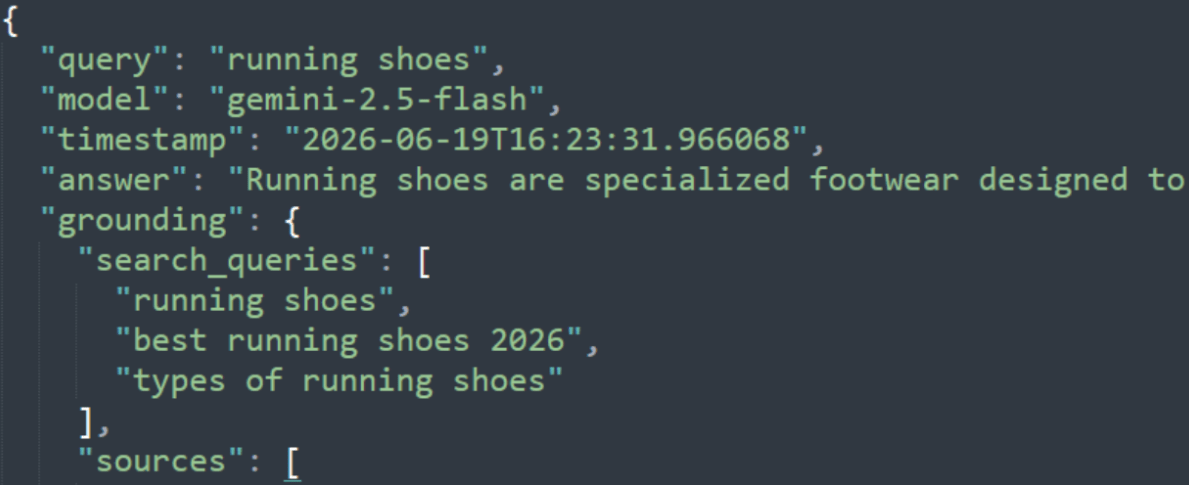
At scale, for a few seed variations and different LLMs, this approach could help you map the full question landscape around a topic – not to create a page per question, but to make sure one well-structured piece covers the territory thoroughly enough.
The implication for your content strategy is significant. Shallow topic coverage loses. Depth wins.
4. Technical accessibility now has two audiences
Getting the technical side right for SEO is well-established territory. Crawlable pages, clean robots.txt, good site speed, proper indexation. Standard stuff.
For GEO, the same foundations apply, but there’s a layer most sites haven’t thought about yet.
AI crawlers aren’t Googlebot. Perplexity, Anthropic, OpenAI, and others all run their own bots, and many sites are blocking them – sometimes intentionally, often accidentally through blanket bot-blocking rules or even via Cloudflare management features. Knowing which crawlers can actually reach your content is the starting point, and server log file analysis is the most reliable way to find out. Logs show you exactly which bots are visiting, how often, and which pages they’re reaching or failing to reach. If you haven’t looked at your logs through this lens, it’s worth doing, and at Varn we can help you with that analysis.
Once that’s clear, the robots.txt file is still the right tool to control your site crawlability, as it applies to AI bots just as it does for search crawlers. But the decisions around it need to be deliberate, and they’re not the same for every site.
For most brands, the goal is simple: make sure AI crawlers can access your content so you remain visible across the full AI landscape. But the picture is more nuanced for some publishers. A news site that has spent years building a subscriber model doesn’t want an AI training crawler bypassing their paywall and scraping premium content for free. That’s a decision that robots.txt can handle, but only if you understand which bot does which job.
This is where Cloudflare’s AI bot management tools could become useful – they give you granular control over which crawlers can access what, without having to manage it all manually in robots.txt. The trade-off is still real though, blocking training crawls today potentially means reduced visibility in the next generation of AI models. Therefore, know what you’re blocking and why, don’t let default settings make that strategic decision for you.
Similarly, you might have heard about the llms.txt file? If you are wondering if you need one, well, Google says you don’t, and to be fair, they are probably right on this one for now. Studies show request volumes are still minimal, and for GEO specifically, it’s not going to move the needle. llms.txt isn’t really a GEO tool anyway, though it seems more relevant for agentic AI. If you’re optimising for AI citations and recommendations today, llms.txt isn’t where to spend your energy. But as agentic search grows (and it will) having a well-structured llms.txt in place could matter more. File it under “not urgent, don’t ignore”.
We covered this in more detail in our previous piece on Markdown files and AI crawlability.
5. You need a completely different measurement framework
This is the one that most brands and agencies haven’t solved yet, and it’s arguably the most important.
In SEO, visibility is measurable. Rankings, impressions, clicks, conversions, etc, it’s all in Search Console or GA4. You know what’s working because you can see it.
GEO metrics largely don’t show up in any report you’re already running, despite the efforts of Bing and recently Google with their reports updates (getting there, though).
Unlike traditional search engines that retrieve and rank indexed pages, LLMs synthesise responses on the fly. They are rewarded for producing plausible answers, not for admitting uncertainty. When a user asks an AI tool to recommend a product, the model does not “know” the correct answer, so it generates the response most statistically likely to satisfy the demand. Then, every output is a probability-driven generation, influenced by context, prompt phrasing, and training data.
As a result, two users can receive different answers to the same question, outputs can vary based on inferred context and prior interactions, and confident answers may still be incomplete or selectively sourced.
Therefore visibility in search for ranking keywords simply doesn’t translate to generative AI models.
Currently, the only way to track GEO presence across non-Google surfaces is to actively prompt AI tools repeatedly for consistency, monitor how your brand is described, track citation rate over time, and watch for indirect signals such as share of voice in AI responses versus competitors.
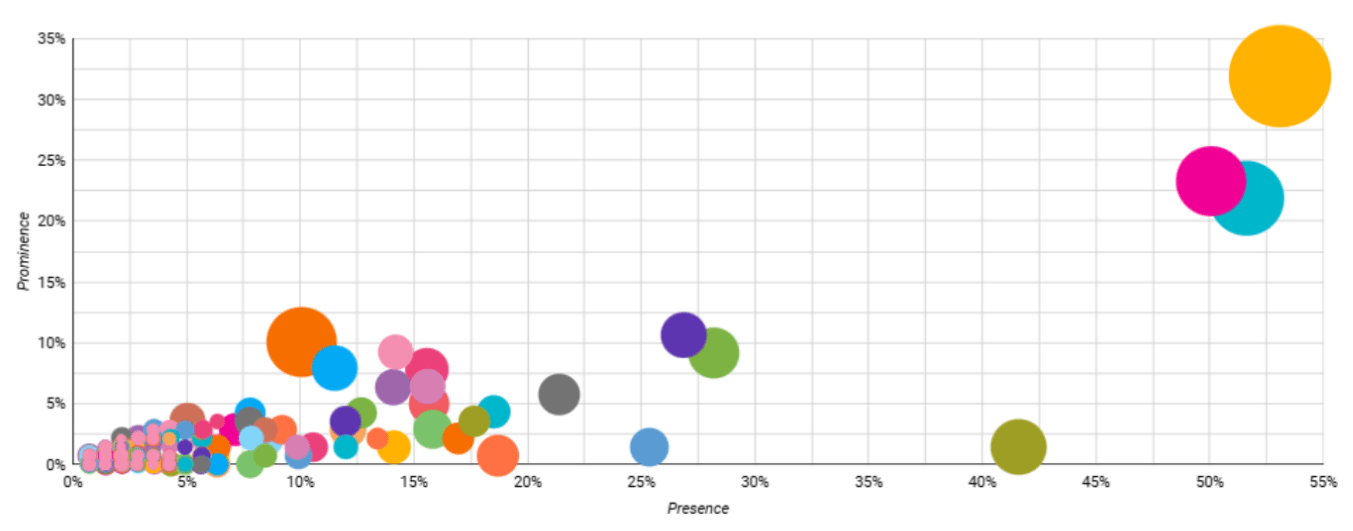
Want to see your competition in the AI landscape?
At Varn, we’ve built our own AI tracking approach that monitors brand AI presence – how reliably and frequently a brand is referenced across platforms for target industry queries – across multiple LLMs. If you want to understand where your brand actually stands in AI search (not just Google), get in touch and we’ll show you what we’re seeing.
Bottom line
The technical foundation is the same for both GEO and SEO. Every signal that makes you visible in AI search is built on the same things that make you visible in organic search. There’s no shortcut that bypasses that groundwork, and if your SEO isn’t in good shape yet, then that’s still where your energy and budget are best spent. That choice should be made deliberately, as your site exists for users first, not bots.
For most businesses, AI attribution is a fraction of what organic search, paid, or even email channels deliver. GEO is worth understanding and worth building toward, but not at the expense of what’s already putting money in the business.
All in all, the AI landscape will keep evolving, and the brands best placed to take advantage of it will be the ones who never stopped doing the basics well.

Do you need SEO/GEO expertise to get visible online?
Get in touchYou might also be interested in...
AI & innovation, SEO Strategy 11.09.25
AI vs SEO? Why new data proves it’s not a competition
Read more
Article by:
AI & innovation, SERP 21.07.25
AI Mode’s Thematic Search: Implications for content & visibility
Read more
Article by: