Search marketing is no longer about optimising for individual channels (and it hasn’t been for many, many years!), it’s more about ensuring your marketing mix is across all of the channels, effectively, where your potential customers are browsing.
TikTok isn’t likely to be the only solution to your marketing needs, but it’s certainly something to consider as part of your wider marketing efforts. If you’re not on TikTok already, or if you’re not optimising for it, your competitors could be taking that share of the market away from you.
In this article, we’ll cover the fundamentals of SEO for TikTok, as well as some of the hidden benefits such as cross-channel visibility.
What is TikTok?
In simple terms, TikTok is a short-form video platform driven by an incredibly sophisticated, interest-based algorithm. Rather than relying purely on who a user follows, TikTok serves content based on direct user behaviour and explicit interests.
While it built its reputation on viral dance crazes, it has matured into a worldwide app for entertainment, education, and product discovery – the latter being hugely important for most marketers.

What does SEO for TikTok mean?
TikTok SEO is the process of optimising your video content so that it ranks at the top of search results when users type specific queries into the platform’s search bar, effectively trying to cater for TikTok’s SEO algorithm.
By optimising for users searching on TikTok, you capture high-intent users who are actively looking for solutions, inspiration, or products – rather than those who are just passively scrolling through their main feed.
What kind of audience uses TikTok?
Not every business is right for using TikTok, it depends on the demographics of your typical audience. However, the demographic data has shifted over the last few years, and the narrative that “TikTok is just for kids” is now pretty outdated.
The global average user age on TikTok has climbed to 26.5 years old – in fact, over 38% of TikTok’s entire audience is now over the age of 30.
Furthermore, data shows that nearly 49% of consumers use TikTok as a “search engine”, to find real-time recommendations, reviews, and ideas. If your audience is there and you aren’t, you are effectively handing visibility to your competitors without putting up a fight.
How does TikTok SEO help improve visibility in traditional search?
Traditional search engines like Google, for example, heavily index TikTok content depending on the intent behind the search query. If the query is more informational, like asking a question or looking for inspiration, Google is more likely to show a video result. So, optimising for TikTok is not an isolated strategy; it can feed into your broader digital marketing mix.
When users search for experiential phrases, tutorial queries, or trend-heavy topics on Google, the traditional Search Engine Results Pages (SERPs) often display dedicated video carousels featuring TikTok (and Youtube, Instagram and other social media platforms) clips. By optimising your videos for TikTok, you can also be opening a backdoor to Google’s front page.
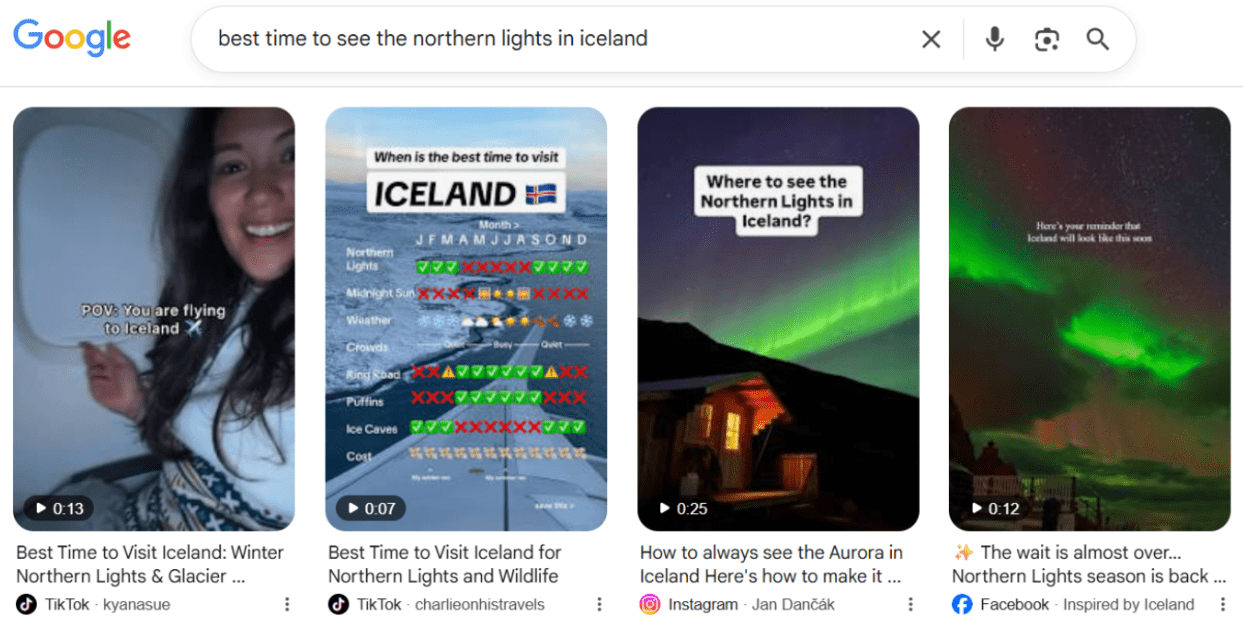
TikTok SEO doesn’t bypass traditional SEO – it amplifies it. If searches in your niche often serve videos in the SERPs, then TikTok is almost certainly something you should be getting involved with, to capture as much of that SERP as is possible. If you don’t, your competitors will.
Why do people use TikTok?
People turn to TikTok because they want immediate, visual, and human-verified answers. Traditional search engines excel at deep research and documentation, whereas TikTok thrives on idea generation and inspiration. Whether someone is searching for a “minimalist home office setup,” “easy 15-minute dinners,” or “honest skincare reviews,” they want to see the reality from someone actually doing it, rather than reading a 2,000-word blog.
Google vs TikTok
The two platforms serve entirely distinct phases of consumer search intent and really aren’t comparable at all. They are totally different ways of searching, but generally speaking:
- Google catches the planners: Users go to Google when they need logistics, definitive facts, deep comparison articles, maps, or local business data.
- TikTok catches the inspiration gatherers: Users go to TikTok to be inspired, discover new trends, see a product in action, and see authentic reactions.
In most cases, TikTok is exceptional at creating demand and inspiring, while Google is exceptional at capturing it and converting.
TikTok SEO best practices and strategies
To rank your videos, you must understand how the platform reads and classifies your content. TikTok’s algorithm relies heavily on specific data inputs to determine relevance, as well as engagement metrics to ensure it’s serving quality content to watchers.
Use of Metadata
- Optimise Video Titles & Descriptions: You have a 90 character limit for video titles, and a 4,000 character limit for descriptions. Ensure your primary keyword targets are towards the front of your caption, to capture both user attention and to optimise for the search crawler. With descriptions, the most effective area is the first 1-2 lines, so use this to your advantage and grab attention early.
- Optimise Hashtags for SEO: Use a mix of highly targeted, intent-focused hashtags. Think of these as context clues for the algorithm to properly index your video. Avoid super generic tags like #fashion or #marketing, you will simply be drowned out. Instead, target highly specific phrases like #sustainablefallfashion or #b2bmarketingtips to effectively reach motivated, niche audiences.
- Optimise Video File Names: Before you even upload your video to the app, rename the raw file (e.g., change “DCIM_1982.mp4” to “best-leather-boots-review.mp4”). While video file names are only a minor signal, it still provides TikTok with crawlable keyword text at the file level and establishes context early.
Understanding the Content
TikTok’s algorithm analyses your videos across four core components to determine exactly what your content is about, and therefore what search terms would be most suitable for it:
- Visual Elements: The AI identifies physical objects, settings, and reads any on-screen text or overlays you add during editing.
- Audio & Speech: Spoken words are automatically transcribed and evaluated. Clearly speaking your target keywords aloud in the first few seconds of the video is highly beneficial.
- Textual Cues: Your written captions, descriptions, and hashtags provide immediate understanding in addition to the text caption and transcript.
- Sounds: The app tracks the use of specific audio clips, backing tracks, or trending sounds, linking your video to broader content clusters that users frequently interact with. Users often search by audio track, so this is an additional method of surfacing your video.
Engagement Metrics
Relevance gets your video into the search pool, but performance dictates how high it ranks. TikTok relies heavily on engagement metrics for ranking performance: likes, comments, shares, saves, and most importantly: completion rates. If viewers routinely drop off in the first two seconds, the algorithm flags the content as low quality. Focus on powerful hooks to keep viewers watching until the very end.
Personalising to the User
The algorithm constantly matches optimised and similar content with historical user behaviour. If a consumer routinely searches for and interacts with videos on a certain topic, TikTok will deliberately serve them optimised videos from that niche – even if the videos are published by a new or a relatively unknown account.
Keyword research for TikTok SEO
You cannot optimise without data. Finding the right keywords on TikTok requires a slightly different approach than traditional keyword research, focusing more on casual, conversational phrases – but the methods of data collection are very similar to keyword research for traditional SEO:
- The Search Bar Autocomplete: Start by typing your core product or service into the TikTok search bar. Look closely at the automated drop-down suggestions; these represent real, high-volume queries that are frequently being searched for by users.
- The “Others Searched For” Box: When watching a video within your niche, look at the search bar at the top or the comment sections for the “Others searched for” prompts to uncover adjacent user interests.
- The TikTok Keyword Insights Tool: Located within the TikTok Creative Center, this tool provides real analytical search data. It allows you to filter by region and industry to see exactly which search terms are trending, their popularity, and click-through metrics.
Use of all of the above can help you to better understand the ways in which people search on TikTok, and therefore the types of phrasing you should be using when creating (and optimising) your video content on the platform.
Optimising your TikTok SEO performance
Achieving sustainable organic traffic on the platform, and consistently ranking highly in search results requires consistency and strict adherence to best practices.
- Post Consistently: Aim to publish regularly – ideally , 3 or more times per day, particularly when first starting out. This high frequency of posting gives you more data points to understand what resonates with the algorithm and broadens your keyword footprint.
- Create Videos Specifically For TikTok: Do not simply re-upload videos or content clearly designed with Instagram or another platform in mind. It looks unnatural to the user and can harm your engagement metrics. Film natively in a 9:16 vertical format and make your content intentionally purposed for TikTok.
- Engage with your Audience: Actively respond to your comments, pin insightful user replies, and encourage discussions. High comment responses signal to the algorithm that your video is generating active community engagement.
- Ride Trends with a Brand Twist: Utilising trending formats or audio can give you an algorithmic lift, but never just copy blindly. Always apply a unique angle that aligns directly with your brand identity or core messaging.
- Keep Content Family-Friendly: TikTok’s AI moderation easily detects profanity or sensitive topics in both text and audio. To ensure maximum reach and avoid algorithmic suppression, keep your content clean and compliant with community guidelines.
TikTok Shop
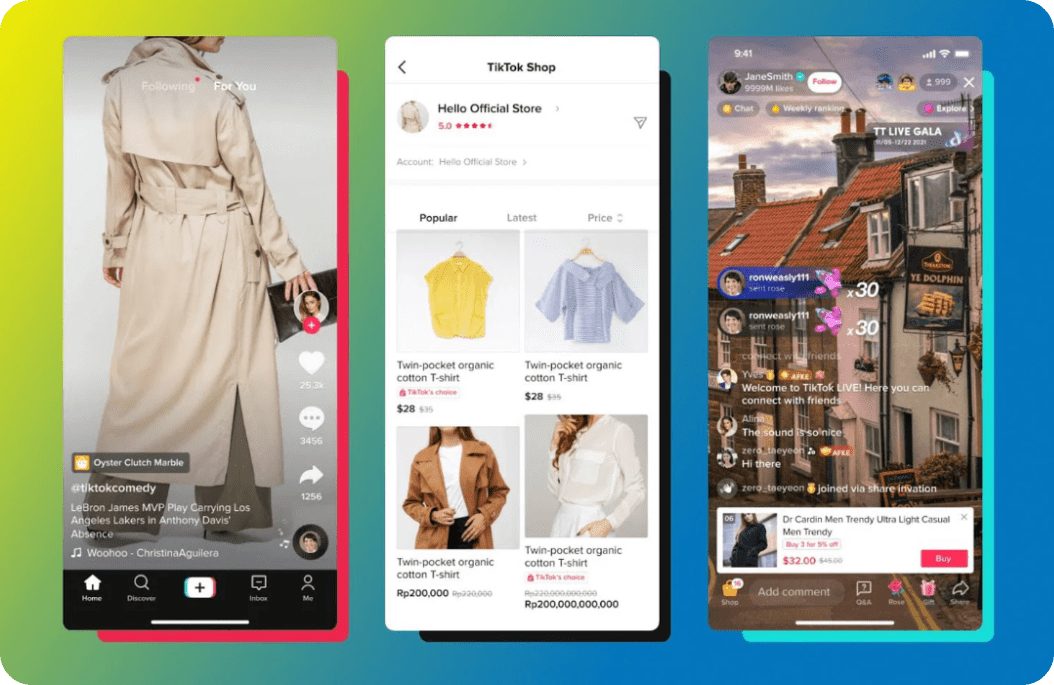
If you are an e-commerce brand, TikTok Shop can be a great additional revenue driver. It allows brands to showcase and sell products directly within the app, creating an incredibly frictionless path from discovery to purchase.
TikTok Shop can be an entire blog post in itself, so we’ll keep it light here – but optimising your videos for search while linking directly to your TikTok Shop products creates a seamless experience from discovery to conversion. A user searches for a solution, finds your optimised video, and checks out entirely within the app without ever having to navigate away to an external browser. If you’re an ecommerce brand and you’re not using TikTok Shop, it would be wise to investigate it.
So, should I focus on TikTok SEO?
The short answer is yes, provided your target demographic aligns with the platform’s maturing user base. For B2C brands, lifestyle services, e-commerce, and modern B2B businesses looking to build real brand authority, it can be an exceptionally powerful channel.
However, a successful TikTok SEO strategy requires realistic expectations and commitment:
TikTok is not a low-budget, quick-win project. It requires dedicated (quality!) video investment, creative resources, and a long-term approach to content production.
It is not a replacement for your core marketing. It serves as a vital part of a holistic, multi-channel search strategy.
Key takeaways
- TikTok has matured into a mainstream search platform, with 38% of its users over the age of 30 – holding serious purchasing power.
- Optimising for TikTok improves your wider digital footprint, often displaying your video content directly on Google SERPs. For some niches, this can be another tactic to gain more real estate in Google’s crowded and competitive search results.
- Success relies on strong optimisation (captions, hashtags, file names), understanding how the AI processes audio and visuals, and maintaining high engagement rates with your audience.
- TikTok requires long-term strategy with real investment and patience, it’s not a quick-win channel.
At Varn, we specialise in helping businesses navigate the complexities of search strategy, data analysis, and online visibility across the multitude of ways that people search nowadays. Whether you want to refine your traditional SEO approach, or build a ‘search everywhere’ strategy across multiple channels, we can help you turn search data into tangible business growth. Get in touch with the team at Varn today to discuss how we can elevate your overall search marketing strategy.

Need help getting ahead in the 'search everywhere' era?
Get in touchYou might also be interested in...
AI & innovation, SEO Strategy 06.01.26
5 Search & video trends that will shape your 2026 marketing strategy
Read more
Article by:
AI & innovation, SEO Strategy 16.12.25
AI isn't watching your videos: Schema Markup for video discoverability
Read more
Article by: